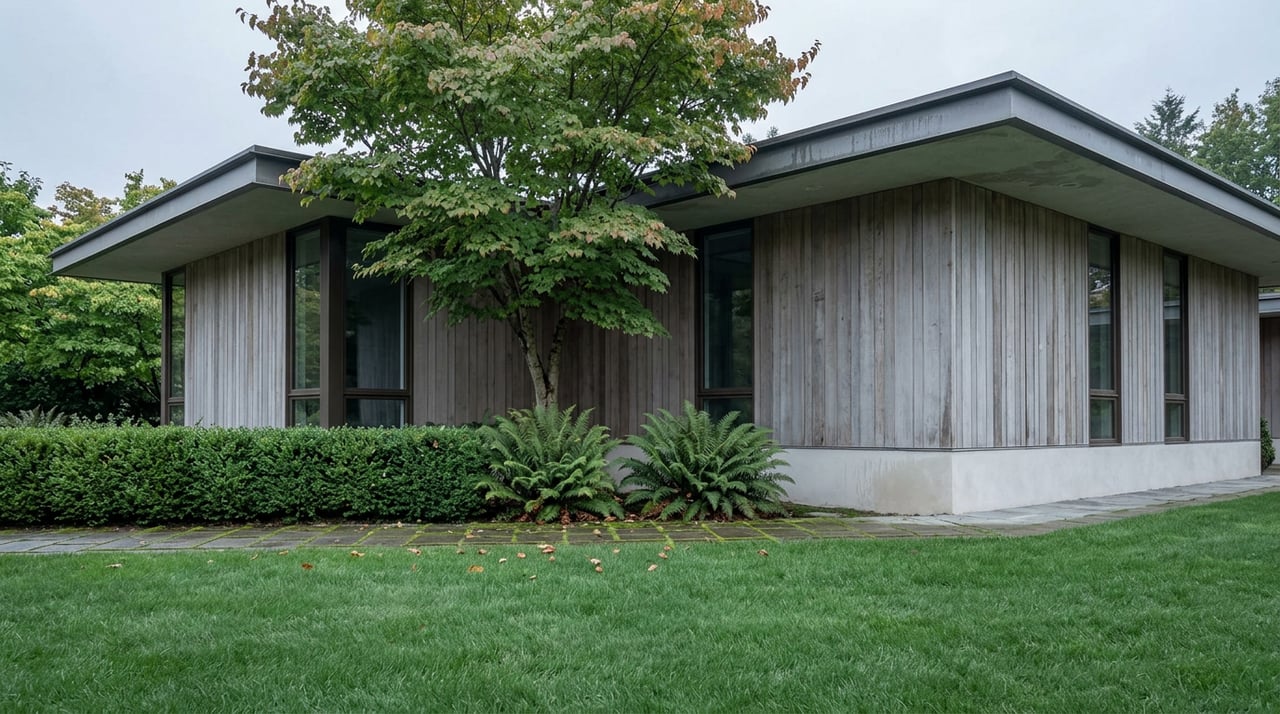
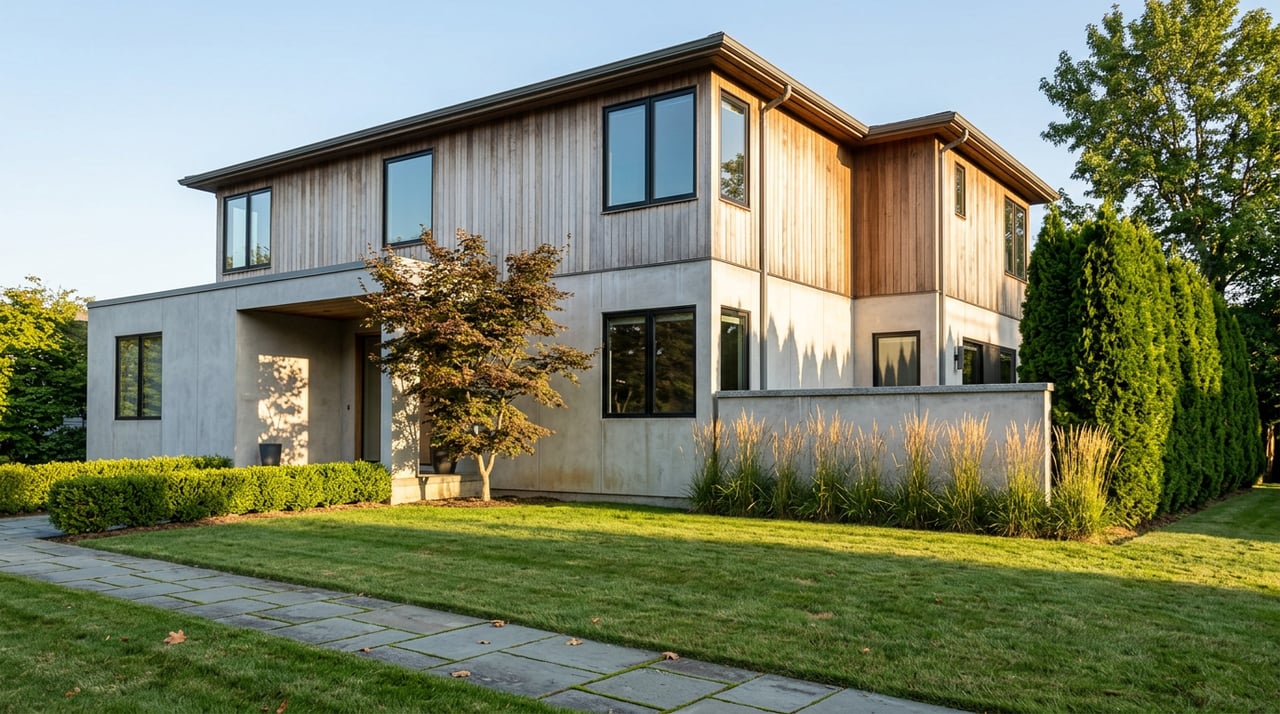
In November 2025, the Clyde Hill City Council held an emergency meeting over a single piece of paper: a permit application. Someone had tried to use the city's new middle housing rules to build a cottage home. Within weeks, the council voted 4 to 0 to cap cottage housing at 1,500 square feet, the only middle housing type Clyde Hill allows under state law. Duplexes, stacked flats, and courtyard apartments stayed off the books entirely, in apparent conflict with state guidance on how the law is supposed to work.
That one application is a useful stand-in for a bigger story. If you're touring homes across Bellevue, Medina, Clyde Hill, Yarrow Point, and Hunts Point and treating them as one interchangeable Eastside luxury market, you're missing the variable that actually determines what happens to a given lot after closing. It isn't the view, the school assignment, or the distance to light rail. It's which city hall the parcel reports to.
The Line Nobody Mentions on a Comparison Tour
Washington's 2023 middle housing law, House Bill 1110, doesn't apply the same way everywhere. Cities are sorted into tiers by population, and the tier determines the ceiling.
Bellevue, with roughly 152,000 residents, sits in the top tier. Cities that size must allow at least four housing units on any residential lot, and six within a quarter mile of a major transit stop. Bellevue's City Council adopted its compliance ordinances on June 24, 2025, updating the Land Use Code to permit cottage housing, courtyard apartments, stacked flats, and townhouses citywide, on top of the detached single-family homes that were already there.
Medina, Clyde Hill, Yarrow Point, and Hunts Point are a different legal universe. Each is small enough, under roughly 3,100 residents at the largest, to fall into the law's lowest tier, which requires only two units per lot with no transit-proximity bump. Medina kept its minimum lot sizes between 16,000 and 30,000 square feet in place. Clyde Hill went further and restricted its two allowed units to cottage housing under a size cap. The state gave these cities a doorway. Several of them have been quietly building a smaller doorway inside it.
What Bellevue's Fourplex Law Actually Looks Like on the Ground
The clearest place to watch this play out is Wilburton, the stretch of 116th Avenue NE that's spent three decades as Bellevue's Auto Row. In April 2026, the city approved Broadstone East Wilburton, a 10-story, 442-unit apartment project that will consolidate four parcels, including a two-story office building currently home to EraGem, Tara Nash Jeweler and Diamond Buyer, and Washington Gold Exchange. The site sits about 1,000 feet from the future Wilburton light rail station and roughly 150 feet from a RapidRide B Line stop. Twenty-two of the units will be designated affordable.
That's not an isolated filing. The Infiniti of Bellevue dealership recently hit the market as an unpriced 360-unit redevelopment opportunity on the same corridor, and city permit records show additional proposals in the 200 to 450 unit range nearby. None of this is accidental. Bellevue's Wilburton Vision, adopted through Ordinance 6802 in July 2024, rezoned roughly 300 acres to allow mixed-use buildings as tall as 45 stories between I-405 and the Eastrail corridor. The zoning changed first. The teardowns followed.
Even inside Bellevue, though, the map isn't uniform. In January 2026, the city added its own emergency-style restrictions along the prized Old Main corridor, using the same interim-ordinance tool Clyde Hill later used to rein in cottage housing. Bellevue's mandate is real, but which blocks feel it first, and which get carved out, is still being decided corridor by corridor.
Here's how the tiers compare on paper, and how each has behaved since the law took effect:
| Jurisdiction | HB 1110 tier | Minimum units per lot | What's happened since 2025 |
|---|---|---|---|
| Bellevue | Tier A (75,000+) | 4, or 6 near transit | Wilburton upzoned to 45 stories; multiple 200 to 450 unit projects approved or filed |
| Medina | Tier C (small, in Seattle UGA) | 2 | Large minimum lots kept in place; focus shifted to restricting teardown size, not density |
| Clyde Hill | Tier C (small, in Seattle UGA) | 2 | Cottage housing capped at 1,500 sq ft by emergency ordinance; only middle housing type allowed |
| Yarrow Point / Hunts Point | Tier C (towns, in Seattle UGA) | 2 | Subject to the same minimum as Medina and Clyde Hill |
The Legal Fight Reshaping the Points
The tier a city sits in isn't the last word. Compliance can be challenged, and one challenge is already reshaping the Eastside's small enclaves. Futurewise, the land use advocacy nonprofit, successfully appealed Mercer Island's comprehensive plan for falling short of separate state affordable-housing planning requirements, a ruling now being contested in King County Superior Court. The same organization has filed a nearly identical appeal against Clyde Hill, arguing its plan doesn't adequately account for housing affordable to lower-income households and leans on accessory dwelling units to do work they likely can't do in a high-cost enclave. Clyde Hill's own government has acknowledged the petition is under review while maintaining the city intends to stay in compliance.
That appeal hasn't stopped Clyde Hill from tightening its rules in the meantime. A hearing could come as soon as spring 2027 unless the two sides settle first. For a buyer evaluating a Clyde Hill lot today, that pending case is part of the property's story, whether or not it shows up in the listing.
The Covenant Wrinkle State Law Can't Touch
There's a second layer worth understanding, separate from what any city council decides. Even where HB 1110 does apply, private restrictive covenants recorded on the property can still block middle housing, because the state law preempts zoning ordinances, not private contracts. As the bill moved toward passage in 2023, residents across Clyde Hill, Medina, Yarrow Point, Hunts Point, and Beaux Arts discussed forming or reinforcing homeowners associations for exactly this reason. Clyde Hill already has three: Mercia Heights, Aqua Vista, and Clyde Loch. If a parcel you're considering sits inside one of these HOAs, or a similar one elsewhere on the Eastside, the recorded covenant, not the state statute, may be the actual ceiling on what can be built there.
What This Means If You're Comparing These Neighborhoods
For a seller in Wilburton or another Bellevue transit corridor, the practical effect is that your lot may now be worth more to a builder than your house is worth to a family, particularly if the parcel sits within that quarter-mile transit radius. That gap between land value and structure value is exactly the kind of detail worth discussing with an agent before you list, since it changes who your realistic buyer pool is.
For a buyer eyeing Medina or Clyde Hill because "it's basically Bellevue but quieter," the redevelopment upside you might be picturing likely doesn't exist in the way it does two miles away. These enclaves have been explicit about preserving single-family character, sometimes over the objection of state regulators. That's not a flaw if privacy and continuity are what you're actually buying. It's a mismatch only if you assumed the zoning math worked the same way it does across the city line.
For anyone comparing the two categories side by side, the honest question isn't which zoning regime is better. It's which one matches what you actually want from the property, five or ten years out.
A few questions worth asking before you write an offer:
- If the lot is in Bellevue, is it within a quarter mile of a major transit stop, and does that change what a builder could legally do with it later?
- If the lot is in Medina, Clyde Hill, Yarrow Point, or Hunts Point, is it subject to an HOA covenant that restricts building beyond what the city itself allows?
- Has the property's city adopted any interim or emergency ordinance since mid-2025 that narrows what its comprehensive plan originally promised?
- If you're buying in Clyde Hill specifically, has the pending Futurewise appeal been resolved, and if not, what's the city's current fallback position?
A couple of questions worth asking before you compare these neighborhoods
Does proximity to the new light rail line automatically increase redevelopment potential? No. Transit proximity only matters where the underlying zoning tier allows the density HB 1110 describes. A lot near a station in Bellevue can reach six units. A lot the same distance from a station in Clyde Hill is still capped at two, and possibly further restricted to cottage housing under the city's own size limits.
Can a homeowners association really override a state housing law? On paper, no state law preempts a city's zoning code without changing what a private HOA covenant recorded on the property can separately restrict. Several Points communities have leaned on exactly that distinction, and it's worth checking the recorded covenants on any lot in these areas before assuming state law tells the whole story.
Comparing Eastside neighborhoods on price per square foot alone leaves out the part that determines what a property can become. If you're weighing a Bellevue address against a Medina or Clyde Hill one, or trying to figure out what a specific Wilburton lot is really worth to a builder versus a buyer, that's a conversation worth having before the offer, not after. Mary Nelson has spent 35 years on this side of the lake and can walk you through what a specific parcel's zoning actually allows. Let's Connect.